Smart Garden Tools Need Smart Storage
12.1 years ago garden maintenance, garden planning

There’s nothing more gratifying on a sunny winter’s morning than going to the basement or garage and stepping on a rake. Yes, the joy of watching that well-worn hickory handle swing up and catch you right in the coffee cup (and then the nose) is an experience underappreciated by those who don’t garden. But what really makes the experience is dumping that hot coffee onto one of your expensive circuit boards.
There’s nothing more gratifying on a sunny winter’s morning than going to the basement or garage and stepping on a rake. Yes, the joy of watching that well-worn hickory handle swing up and catch you right in the coffee cup (and then the nose) is an experience underappreciated by those who don’t garden. But what really makes the experience is dumping that hot coffee onto one of your expensive circuit boards.
Of course, that’s all purely facetious. Unfortunately, it can be all too real for some of us who lack good storage space for our off-season garden needs – many residents in warmer, seasonal cities like Cincinnati struggle with effective organization and protection for their garden equipment. For most of us, the only climate controlled storage we have is where we store ourselves–the ol’ hacienda.
Shovels, cultivators, chemicals, and our own array of homemade tools accumulate quickly and have to go somewhere. Plus, most people don’t want all those items underfoot for several months a year. So in general, we find a rain-resistant place to store everything outside, and maybe do a little rehab work come spring.
However, the smart gardener today uses the thinker as much as the tiller. Greater technology in irrigation management, temperature monitoring, and humidity observations means that, at season’s end, we now have some very expensive and fragile equipment that needs someplace to go until the first light of spring.
Scientific instruments like these can tolerate significant meteorological swings. Store-bought ones will include advice on acceptable temperature and humidity ranges. Those you’ve made at home will provide that information on the individual components you’ve bought. And even within their accepted ranges, they all have issues with calibration.
Your hand tools shouldn’t be, well, left out in the cold either. You may have hundreds of dollars’ worth of them, shivering in the December chill like Washington’s troops crossing the Delaware. Keeping them in a warm place preserves your investment for the long haul.
Your power equipment needs good care as well. As smart as we garden now, we do still use the internal combustion engine quite a bit. These aren’t as sensitive to cold and moisture as electronics, of course, but the guts of your tiller do not fare well if your 2012 gasoline is still in there in 2013.
The best thing to do? You can buy gas stabilizer and pour it in the tank, or simply run the machine during its last use of the season until it is out of gas. You can till something, or just stand there and let it run. The same goes for string trimmers, mowers, pressure washers, and all gas-powered machinery.
Good climate controlled storage can also allow you to grow produce year-round, if you take a few steps to plan for it. Apart from the delicious outcomes, you will also find yourself in a horticultural state of mind all year. That makes you a more curious and creative gardener.
So take those cool fall days as the last vines are drying and organize some available space in your home to preserve your tools, nurture your plants, and protect your feet.
Doing a Garden Makeover or Building from Scratch? Here are the Tools You’ll Need
12.2 years ago garden maintenance, garden planning, guest post

The first tool, and perhaps the most important tool for any project, is a solid plan of action. The list of tools needed for a garden makeover or for building a garden from scratch will change slightly depending on your plan. The term garden encompasses many different outcomes.
This article focuses on the tools needed to build a vegetable garden. Plan your garden in accords with what you consume and with ideas that suite plants that grow in your area. Consider seasonal changes and whether or not your garden will need a greenhouse or a hoop house for extending your gardens growing season.
Giving your garden shape:
The second set of tools that are important are a ball of twine and marking stakes. These two tools allow your garden to move from one dimensional planning into a three dimensional form. Stake out the area that will become your garden and then stake out any features that you might consider putting into the garden. These may include raised beds, pathways, irrigation/hose bibs, a greenhouse, and a planting table. Using twine and stakes allows the gardener to see exactly how space is going to be used, and it breaks up a large project into manageable pieces.
Implementing Garden Elements:
The third set of tools that you will need to focus on are the tools that will actually help you begin to create the elements that make up your garden plan.
If you are creating raised beds than you will need a saw, a drill, and wrenches/hammer for fastening the wood pieces together. You might also consider buying a raised garden bed kit.
If your garden plan calls for an in-ground garden, then you will need a sturdy shovel and perhaps a tiller for turning the earth. It is also recommended that you use a soil screen and a wheelbarrow for sifting the soil. Most experts agree that an in-ground garden needs to be dug down to a minimum of 18 inches. Expert gardens may dig down to 2 feet and replace the bottom six inches of soil with compost/manure.
Sifting the soil helps to promote root growth from plants, especially root crops such as carrots and potatoes. Note: Even with a tiller, a shovel is still needed to dig down deep enough to create a productive in-ground garden. For raised beds do not forget to factor in the cost of soil, to fill them. Long term projects can recycle aged compost in to new beds to help build up soil levels over time. This is not only free it improves soil composition for plants. If your garden plan calls for yearly expansion, then consider building the raised beds first, planting a cover crop and using garden produced compost to fill them over time.
Standard Garden tools:
A sturdy wheelbarrow, shovel, hoe, a bow rake, and hand tools for weeding amid your vegetables are all that are necessary for maintaining a garden. This means that the cost of buying tools to start a garden is a relatively low cost investment. Even the creation of a compost-system can be done free of charge. It is a wonder that more people do not take up gardening as both a means of producing food and as a hobby.
After all, nothing is a better return on your time investment than a vegetable garden. It continues to produce regardless of the economy, and when recession hits, its value outshines even the best investment.
About the Author: Thad works with O’Connor’s Lawn—Your source for riding lawn mowers . Thad is an outdoor enthusiast who enjoys writing about landscaping and lawn care.
GrowVeg vegetable gardening software: Square Foot Gardening and more
12.4 years ago garden planning, spring, sprouting, square foot gardening
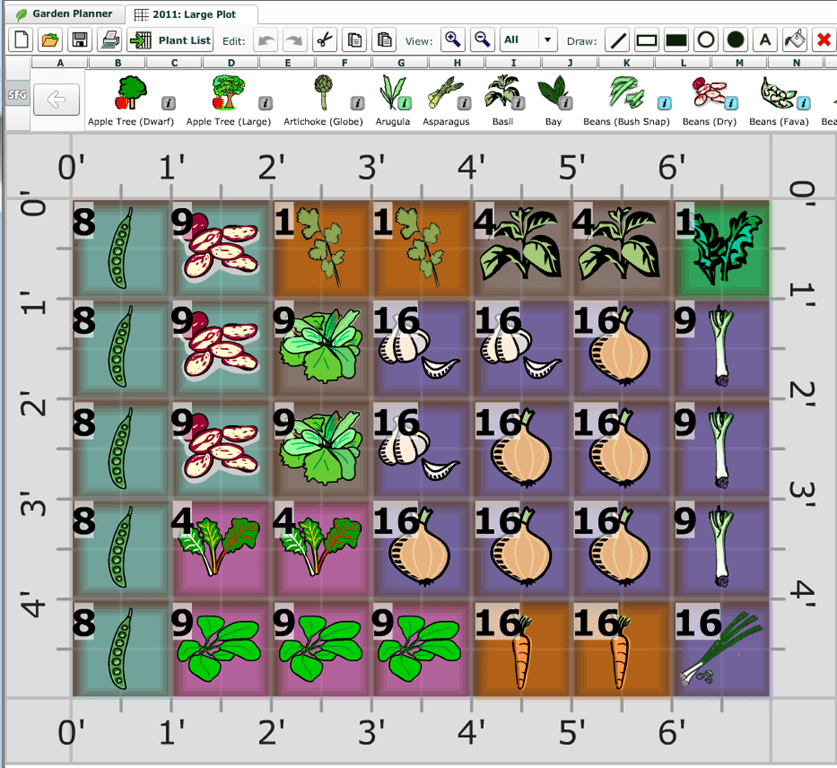
Seeing a few rays of sunshine in the gloomy Pacific Northwest, I decided to open up GrowVeg and start planning for my fall crops for the upcoming season. I was pleased to notice a new bit of functionality the Square Foot Gardening feature. I started growing with the square foot method after being inspired with my first gardening book appropriately titles “Square Foot Gardening
GrowVeg takes advantage of this technique by allowing you to select the plants you want to grow and automatically shows you the amount of “squares” your plant needs as well as how many plants you can add in the square with the number appearing in the top left corner.
One additional benefit of GrowVeg is when you use the service for a couple years, not only can you save time by reusing the template from the previous year, but it also remembers what you planted at the various locations and warns you to not plant that family of vegetables in the same location for effective crop rotation (another recommendation of Square Foot Gardening

Another cool feature is revealed by clicking on the info icon it will display a real picture of the plant and all of the basic information you need to know to grow almost any edible plant you can think of.

I will admit last year I did not follow the planting dates that GrowVeg recommended, I was optimistic (ok really just impatient) and started my seed a few weeks too early resulting in some poor yields for my cold spring crops. This year I am going to be a little more pessimistic and use their dates and following the convenient planting guide. Which along with the reminder emails (and a little restraint) hopefully I will been eating a few more spring veggies this year.

If you want to to try GrowVeg.com out for yourself you can sign up for a free 30 day trial and in a 5-10 minutes you can have some detailed plans as well.
Go Green in the Veggie Patch
12.4 years ago garden planning, guest post, vegetables

Vegetable gardeners inherently have a leg up on the casual nature lover: they’re already doing their part for the environment by growing their own vegetables in the first place. Mass-produced horticulture can be a pretty massive strain on the environment when you factor in the nasty effects of pesticides and the sometimes wasteful techniques employed by factory farmers. The agribusiness is a sticky one; while it provides much of our nation with balanced nutrition and a range of job opportunities, it’s tough to deny the toll it takes on Mother Nature.
Vegetable gardens, while often small and discreet, are a common way for homeowners to allay their environmental impact. Here are a few tips to keep in mind in order to get the most out of your veggie plot while wounding the least of the environment:
1. Compost. Of course, that means a little extra effort on your end, but it’s well worth it. We all know what an ecological perk homegrown compost can be, so don’t skip out. Use what you have on hand – eggshells, grass cuttings, newspaper, manure, whatever it may be. Just make sure you’ve got something you can throw together to make your own organic fertilizer.
2. Accessorize. Eco-friendly garden maintenance is a lot easier when you have a little help. Make things easier on yourself by equipping your vegetable patch with the right supplies. Make your own plant markers or purchase recycled materials that will help you separate your squash from your spinach. Put out a rain barrel and make use of precipitation to water your plants at a later date. Look around for trowels and spades made with bamboo or other organic materials – there are plenty of brands out there that are selling earth friendly gardening tools.
3. Simplify. Certain vegetables offer up low maintenance, low effort endeavors that can produce surprisingly high yield. Potatoes, green beans and carrots are all pretty easy to grow, and don’t require much attention. Make some room and plant a few of your favorites; there won’t be much more you have to do other than some routine upkeep. The environmental benefit comes in what you don’t end up spending on potentially harmful garden care products
That’s it! Well, of course, that’s not all of it – but those are some great places to start. Follow these Eco-friendly tips in your vegetable garden and spread the word! What are you and your friends doing to stay green in the veggie patch?
Author: Kristina Ross is a writer by trade and gardener by habit. She’s currently a freelancer and blogger for Save On Energy.
Create your own organic kitchen garden in 2013
12.4 years ago garden planning, guest post, kitchen, organic, vegetables
With a continued focus on healthy eating this year and the recommendation to eat healthy, organic foods where possible, what better way to incorporate the two by creating your very own organic kitchen garden in 2013. With a little planning and imagination you’ll soon experience the joys of planting and growing your own food that will see you kitchen stocked with fresh produce all year round. Celebrate the seasons and get in touch with the foods that should be cooked with and consumed throughout the different cycles of the year and you’ll be sure to be taking in maximum vitamins with every bite without any of the pesticides.
So how do you get started? The first thing you need to consider is the available space you have within your garden to dedicate to growing food. You’ll need a bright sunny spot that is relatively sheltered from the winds and ideally as flat as possible to allow for even water distribution across your plot. Make sure you have easy access to the plot, ideally locating it as close to your kitchen door as possible to ensure you can reap the benefits of popping out into the garden whilst cooking to pick your herbs and vegetables for your meal.

To achieve the best results, start off simple and choose vegetables that are known to be easy growers such as lettuces, Swiss chard and chives. Add to this some tasty beetroots and radishes and you’ll soon see just how much fun growing your own food can be. To achieve success with your vegetable growing you need to ensure that your plants have access to as much sun as possible – ideally at least 6 hours each and every day.
If your garden tends to fall into the shade halfway through the day you might want to consider planting directly into containers rather than the ground to allow you to move your plants into the sunny areas with relative ease. As the seasons change and the position of the sun moves around your garden you might find this one of the most valuable tips to consider.
Container growing also opens up the opportunity for those people without gardens to participate in growing their own food and can do very well on even the smallest sunny balcony or patio. All you need to do is ensure that your pots are large enough to take the full growth of the plant, add plenty of drainage holes and water on a daily basis. For best results add a liquid fertilizer once every fortnight and you’ll soon start to see results.

If you have a sunny window in your kitchen this is a great place to grow your favorite herbs from and fills the space with an incredible aroma. It’s also the ideal place to start off tomato plants, bell peppers and squash that benefit from that extra bit of nurturing and protection in the early days. What’s more, bringing your organic garden directly into your kitchen in this way is incredibly inspiring when meal planning.

Like these planters? I found them here
Before planting your seeds you need to ensure that your soil is as fertile as possible. Add essential nutrients by working the soil through with rich compost manure and high quality fertilizers before you get started to guarantee your end result of delicious, healthy produce. On top of this you will need to maintain a regular watering routine, depending on the weather and soil you have planted into and the types of vegetables you are growing. As a general rule, leafy vegetables need to be watered more frequently than root vegetables. Be sure to add proper drainage to your soil to allow your vegetables to have the best chance of growing fully. Compost or bark chippings achieve this for you easily.
With all this in mind you are now ready to plan your own organic kitchen garden to ensure you are supplied with tasty, home grown food all year round. With some daily dedication to your plot you’ll enjoy following the seasonal patterns of planting, pest control and feeding as you watch your vegetables grow, inspiring you with ideas for new recipes to experiment with for highly nutritious, cost effective and deliciously organic mealtimes.
Author Bio: The article is being written by Peter Smith. He loves to renovate his home every year for purchasing new furniture or accessory he trusts the brand Mayer Blue.
GrowVeg and Urban Farmer Seeds Giveaway results
14.3 years ago garden planning, giveaway, seeds
 |
The winner of the Flower and Vegetable seed kits is Luis Tobon. You should have a email in your inbox requesting you mailing information |
 |
The winner of the GrowVeg one year subscription goes to Ragnar. I have passed on your contact info to GrowVeg and you should receive your gift certificate for your one year subscription shortly. |
For those you didn’t win, no worries we have more giveaways coming up this weekend.


